
Extrusión de Film Soplado HDPE: Características y Aplicaciones
Extrusión de Film HDPE: Guía de Máquina para hacer bolsas de plástico
High-Density Polyethylene (HDPE) blown film extrusion is a pivotal process in the production of plastic bags, known for its versatility and durability. This article delves into the characteristics of HDPE film, the intricacies of the extrusion process, and the various applications of HDPE in the plastic bag industry. Readers will gain insights into how HDPE’s unique properties make it suitable for diverse packaging needs, as well as the machinery involved in its production. The growing demand for sustainable packaging solutions also highlights the importance of understanding HDPE’s role in modern manufacturing. We will explore key properties of HDPE film, the extrusion process, types of machines used in Uruguay, applications of HDPE film, and current market trends.
What Are the Key Properties of High-Density Polyethylene Film?
High-Density Polyethylene (HDPE) film is characterized by its high strength-to-density ratio, making it an ideal material for various applications. The primary properties that define HDPE film include its density, tensile strength, and resistance to chemicals and UV light. These attributes contribute to its widespread use in packaging, particularly for plastic bags, which require durability and flexibility. Understanding these properties is crucial for manufacturers aiming to optimize their production processes and meet market demands.
How Do Density and Tensile Strength Affect HDPE Film Performance?
Density and tensile strength are critical factors influencing the performance of HDPE film. Density refers to the mass per unit volume of the material, which affects its strength and rigidity. Higher density typically results in greater tensile strength, allowing the film to withstand stress without tearing. This is particularly important in applications where the film must support heavy loads or endure rough handling. For instance, HDPE bags used in industrial settings benefit from these properties, ensuring they can carry substantial weights without compromising integrity.
What Chemical and UV Resistance Features Make HDPE Suitable for Packaging?
HDPE film exhibits excellent resistance to a variety of chemicals, including many acids and bases, which makes it suitable for packaging products that may be corrosive. Additionally, its UV resistance protects contents from degradation due to sunlight exposure, extending the shelf life of packaged goods. This combination of chemical and UV resistance is particularly beneficial for agricultural applications, where products are often exposed to harsh environmental conditions. As a result, HDPE film is a preferred choice for manufacturers looking to enhance the durability and longevity of their packaging solutions.
Máquina para Hacer Bolsas (Uruguay) specializes in providing machinery for plastic bag production, including equipment designed specifically for HDPE blown film extrusion. Their offerings ensure that manufacturers can produce high-quality HDPE film that meets industry standards.
How Does the HDPE Blown Film Extrusion Process Work?
The HDPE blown film extrusion process involves several key steps that transform raw polyethylene pellets into finished film. This process is essential for producing the lightweight, flexible films used in plastic bags. Understanding the intricacies of this process helps manufacturers optimize production efficiency and film quality.
What Are the Main Steps in Producing HDPE Blown Film?
The production of HDPE blown film consists of the following main steps:
- Melting and Extrusion: Raw HDPE pellets are fed into an extruder, where they are heated and melted. The molten plastic is then forced through a die to form a continuous tube of film.
- Blowing: The extruded tube is inflated with air, creating a bubble that expands the film to the desired thickness. This step is crucial for achieving the film’s final dimensions.
- Cooling: The film bubble is cooled using air to solidify the material, ensuring it retains its shape and properties.
- Winding and Cutting: Once cooled, the film is wound onto rolls or cut into sheets, ready for further processing or packaging.
This systematic approach ensures that the HDPE film produced is uniform in thickness and quality, meeting the specifications required for various applications.
How Do Extrusion Equipment Components Influence Film Quality?
The quality of HDPE film is significantly influenced by the components of the extrusion equipment. Key factors include:
- Extrusion Die Design: A well-designed die allows for precise control over the film’s thickness and shape, directly impacting its characteristics.
- Cooling System: Effective cooling systems maintain the integrity of the film as it solidifies, preventing defects and ensuring uniformity.
- Adjustable Stainless Steel Channel: This feature enables adjustments in three dimensions, facilitating the production of films with specific thicknesses and properties.
- Extraction Unit: The type of extraction unit, whether belt or rollers, affects the tension and speed of the film processing, influencing overall quality.
- Cutting Mechanism: A rotary cutter with customizable blades ensures accurate cutting, which is essential for maintaining consistent film dimensions.
- Speed Regulation: Utilizing a frequency converter to control the machine’s operating speed enhances precision in the extrusion process, leading to improved film quality.
These components collectively ensure that the film produced meets the required specifications for efficiency and quality.
Precise control over temperature and other parameters within the extruder is paramount for maintaining the high quality of plastic film.
Plastic Extruder Control: Temperature Management for Quality Film
The chapter presents the development of a new control system for plastic extruders. The extrusion machine consists of a hopper, a large screw within a barrel that transports the plastic material up to the die, and heating and cooling zones distributed along the barrel. Four control blocks were developed: temperature control, parison control, hydraulic control, and sequence control. The chapter concentrates on temperature-control problems, since a precise temperature profile along the barrel is very important for maintaining high quality plastic. The problem is addressed using auto-tuning and adaptation algorithms for each of the 17 PID controllers activating the heating/cooling zones along the barrel. These control blocks have been realised on standard modular programmable logic controllers (PLC) and tested on an industrial plastic extruder.
Temperature Control in a Plastic Extruder Control System, 2013
Ensuring high-quality film production requires careful attention to potential issues and defects that can arise during the complex film blowing process.
Polymer Film Blowing: Defects, Process Limitations & Sustainable Packaging
This review provides an in-depth look at the key process limitations and (structural) defects encountered in the production of polymer films via film blowing extrusion technology. Film blowing is the most widely used method for producing plastic films across various industries, with its increasing demand driven by flexible packaging needs. Overcoming the challenges of this complex production process is essential for ensuring high quality and meeting the growing demand for modern applications, taking into account polymer circularity. In the first part of this paper, the focus is on conventional films, generally polyolefin single-layer films. Common defects such as bubble instability, gauge variations, wrinkles, melt fractures, optical defects, blocking, and surface imperfections like fish eyes are discussed. The most important causes behind these issues are elaborated on, including various molecular and processing parameters, with this paper also offering practical mitigating st
Structural Defects and Processing Limitations for Polymer Film Blowing Applications: A Comprehensive Review of Conventional and Emerging Sustainable …, I Efimov, 2025
What Types of Plastic Bag Making Machines Are Used in Uruguay?
In Uruguay, the types of plastic bag making machines used include:
- Máquina Para Hacer Bolsas de plástico (Plastic Bag Making Machine)
- Extrusora de Película de Polietileno (Polyethylene Film Extruder)
- Máquina para Bolsas Pouch (Pouch Bag Machine)
- Impresora Flexográfica (Flexographic Printer)
- Impresión Rotograbado (Rotogravure Printing)
- Máquina de Film Stretch (Stretch Film Machine)
- Máquina para fabricar bombillas (Straw Making Machine)
- Máquina Para Hacer Burbuja de Plástico (Bubble Wrap Machine)
- Máquina Refiladora (Rewinding Machine)
- Peletizadora de plástico (Plastic Pelletizer)
These machines play a crucial role in the production of various types of plastic bags, each designed to meet specific manufacturing needs.
What Are the Differences Between Single-Layer and Multi-Layer Extruders?
Single-layer and multi-layer extruders serve different purposes in the production of plastic films. Single-layer extruders produce a uniform film, which is suitable for basic applications. In contrast, multi-layer extruders allow for the combination of different materials, enhancing the film’s properties such as barrier resistance and strength. This versatility makes multi-layer extruders ideal for producing specialized films that require specific characteristics, such as those used in food packaging.
How Do Automation and Machine Features Enhance Production Efficiency?
Automation and advanced machine features significantly enhance production efficiency in plastic bag manufacturing. Key benefits include:
- Computerized Control Systems: These systems allow for precise monitoring and adjustments during the production process, reducing errors and waste.
- Automatic Length Adjustment: Machines equipped with this feature can quickly adapt to different product specifications, minimizing downtime.
- Photoelectric Tracking: This technology ensures accurate counting and tracking of produced items, streamlining the workflow.
- High-Speed Production: Automated systems enable faster production rates, increasing overall output without compromising quality.
These advancements contribute to maximizing production capacity and reducing operational costs, making them essential for modern manufacturing.
Which Applications Benefit Most from HDPE Film and Bags?
HDPE film and bags are utilized across various sectors, each benefiting from the unique properties of the material. Understanding these applications helps manufacturers tailor their products to meet specific market needs.
How Is HDPE Film Used in Retail, Industrial, and Agricultural Packaging?
HDPE film is widely used in retail, industrial, and agricultural packaging due to its strength and versatility. In retail, HDPE bags are commonly used for grocery shopping, providing a lightweight and durable option for consumers. Industrial applications often involve bulk packaging, where HDPE film protects products during transportation and storage. In agriculture, HDPE film is used for greenhouse covers and mulch films, helping to enhance crop yields by providing protection from environmental factors.
What Custom HDPE Film Solutions Are Available for Specific Needs?
Custom HDPE film solutions are increasingly in demand to meet specific packaging requirements. Manufacturers can tailor the thickness, color, and additives of HDPE film to suit various applications. For instance, UV inhibitors can be added for outdoor applications, while specific colors may be used for branding purposes. This customization allows businesses to differentiate their products in a competitive market, ensuring they meet both functional and aesthetic needs.
What Are the Current Market Trends and Sustainability Practices in Uruguay?
The market for HDPE film and bags is evolving, with a growing emphasis on sustainability and eco-friendly practices. Understanding these trends is essential for manufacturers aiming to stay competitive in the industry.
How Is Recycled HDPE Integrated into Blown Film Extrusion?
Recycled HDPE is increasingly being integrated into the blown film extrusion process, providing an environmentally friendly alternative to virgin materials. This practice not only reduces waste but also lowers production costs. However, challenges remain in ensuring the quality and consistency of recycled materials, which can affect the final product’s performance. Manufacturers are investing in advanced sorting and processing technologies to enhance the quality of recycled HDPE, making it a viable option for various applications.
Further research highlights the practical application of recycled polyethylene in blown film extrusion, particularly for products like garbage bags, and examines the impact on mechanical properties.
This research provides valuable insights into the mechanical properties of multi-layer films incorporating recycled polyethylene for garbage bag production.
Recycled HDPE Blown Film for Garbage Bags: Mechanical Properties
ABSTRACT: The article presents the results of experimental studies on selected, mechanical properties of three-layer film, produced by blown film extrusion. Three-layer film was developed for making garbage bags. The research was carried out under industrial conditions. The three-layer film sleeves tested were made of low and high density polyethylene and differed in raw material composition, including a different content of recycled polyethylene in individual film layers. Static tensile strength, tear strength and puncture strength tests were carried out using the dart drop method. On the basis of the results obtained, the impact of the content of polyethylene regranulate on the composition of the raw material of the multilayer film in the above-mentioned selected mechanical properties was assessed, in relation to the expected values of these parameters, ensuring the correct use of the three-layer film in the production process and obtaining a garbage bag with appropriate utility features.
… on the Influence of the Type and Content of Regranulate on Selected Mechanical Properties of the Three-Layer Polyethylene Film Obtained by Blown Film Extrusion, W Woźniak, 2024
What Energy Efficiency Innovations Are Impacting Local Manufacturing?
Energy efficiency innovations are significantly impacting local manufacturing practices in Uruguay. The use of frequency converters in machinery, such as in high-speed plastic pelletizers and rotogravure printing machines, allows for precise control of motor speed. This enhances synchronization, reduces energy consumption, and improves production efficiency. Additionally, implementing electric heating methods in printing processes contributes to energy savings, aligning with the industry’s shift towards more sustainable practices.
| Machine Type | Function | Key Features |
|---|---|---|
| Plastic Bag Making Machine | Produces various bag types | High-speed operation, customizable sizes |
| Polyethylene Film Extruder | Creates HDPE film | Adjustable thickness, efficient cooling system |
| Flexographic Printer | Prints on plastic bags | High-quality printing, fast drying times |
This table illustrates the diverse range of machines used in the production of HDPE film and bags, highlighting their functions and key features that enhance manufacturing efficiency.
In conclusion, HDPE blown film extrusion is a vital process in the production of plastic bags, characterized by its unique properties and versatility. Understanding the intricacies of the extrusion process, the types of machines used, and the various applications of HDPE film is essential for manufacturers aiming to optimize their production and meet market demands. As sustainability becomes increasingly important, the integration of recycled materials and energy-efficient practices will shape the future of HDPE film production.
Share:
More Posts
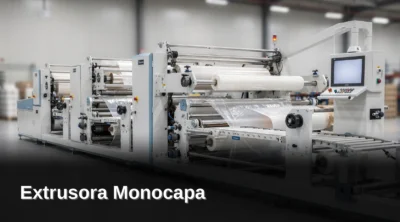
Extrusora Monocapa: Producción Simple y Eficaz
Máquina para hacer bolsas de plástico ofrece extrusora monocapa para HDPE y LDPE con sistema EMS en tiempo real. Producción eficiente y confiable.
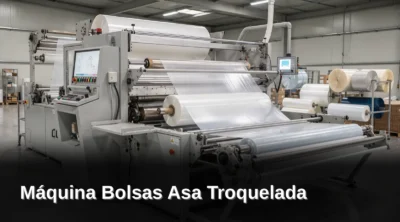
Máquina Bolsas Asa Troquelada: Diseño y Funcionalidad
Máquina para hacer bolsas de plástico especializada en producción de bolsas asa troquelada con diseño reforzado y funcionalidad profesional para retailers en.
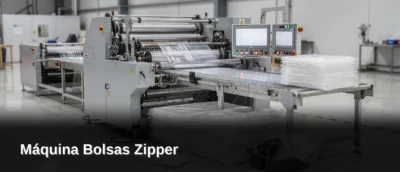
Máquina Bolsas Zipper: Cierre Hermético Reutilizable
Máquina para hacer bolsas de plástico produce equipos automáticos con zipper de cierre hermético reutilizable para alimentos, granulados y empaques flexibles.
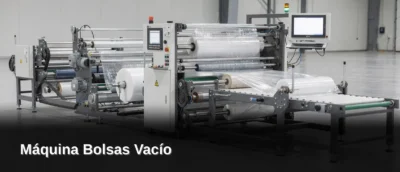
Máquina Bolsas Vacío: Conserva Alimentos Frescos
Máquina para bolsas de vacío fabricada en Canelones, Uruguay. Motor de frecuencia, corte de precisión y sellado hermético para plantas cárnicas, lácteas y de